
Search results for "Account private">account" in Home Design Ideas
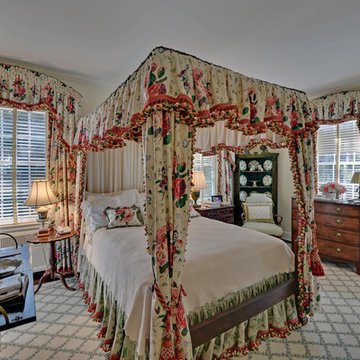
 Envision Web
Stuart Wade, Envision Virtual Tours
The second-largest and most developed of Georgia's barrier islands, St. Simons is approximately twelve miles long and nearly three miles wide at its widest stretch (roughly the size of Manhattan Island in New York). The island is located in Glynn County on Georgia's coast and lies east of Brunswick (the seat of Glynn County), south of Little St. Simons Island and the Hampton River, and north of Jekyll Island. The resort community of Sea Island is separated from St. Simons on the east by the Black Banks River. Known for its oak tree canopies and historic landmarks, St. Simons is both a tourist destination and, according to the 2010 U.S. census, home to 12,743 residents.
Early History
The earliest
St. Simons Island Village
record of human habitation on the island dates to the Late Archaic Period, about 5,000 to 3,000 years ago. Remnants of shell rings left behind by Native Americans from this era survive on many of the barrier islands, including St. Simons. Centuries later, during the period known by historians as the chiefdom era, the Guale Indians established a chiefdom centered on St. Catherines Island and used St. Simons as their hunting and fishing grounds. By 1500 the Guale had established a permanent village of about 200 people on St. Simons, which they called Guadalquini.
Beginning in 1568, the Spanish attempted to create missions along the Georgia coast. Catholic missions were the primary means by which Georgia's indigenous Native American chiefdoms were assimilated into the Spanish colonial system along the northern frontier of greater Spanish Florida. In the 1600s St. Simons became home to two Spanish missions: San Buenaventura de Guadalquini, on the southern tip of the island, and Santo Domingo de Asao (or Asajo), on the northern tip. Located on the inland side of the island were the pagan refugee villages of San Simón, the island's namesake, and Ocotonico. In 1684 pirate raids left the missions and villages largely abandoned.
Colonial History
As
Fort Frederica
early as 1670, with Great Britain's establishment of the colony of Carolina and its expansion into Georgia territory, Spanish rule was threatened by the English. The Georgia coast was considered "debatable land" by England and Spain, even though Spain had fully retreated from St. Simons by 1702. Thirty-one years later General James Edward Oglethorpe founded the English settlement of Savannah. In 1736 he established Fort Frederica, named after the heir to the British throne, Frederick Louis, prince of Wales, on the west side of St. Simons Island to protect Savannah and the Carolinas from the Spanish threat.
Between 1736 and 1749 Fort Frederica was the hub of British military operations along the Georgia frontier. A town of the same name grew up around the fort and was of great importance to the new colony. By 1740 Frederica's population was 1,000. In 1736 the congregation of what would become Christ Church was organized within Fort Frederica as a mission of the Church of England. Charles Wesley led the first services. In 1742 Britain's decisive victory over Spain in the Battle of Bloody Marsh, during the War of Jenkins' Ear, ended the Spanish threat to the Georgia coast. When the British regimen disbanded in 1749, most of the townspeople relocated to the mainland. Fort Frederica went into decline and, except for a short time of prosperity during the 1760s and 1770s under the leadership of merchant James Spalding, never fully recovered. Today the historic citadel's tabby ruins are maintained by the National Park Service.
Plantation Era
By the start of the American Revolution (1775-83), Fort Frederica was obsolete, and St. Simons was left largely uninhabited as most of its residents joined the patriot army. Besides hosting a small Georgia naval victory on the Fort Frederica River, providing guns from its famous fort for use at Fort Morris in Sunbury, and serving as an arena for pillaging by privateers and British soldiers, the island played almost no role in the war.
Following the war, many of the townspeople, their businesses destroyed, turned to agriculture. The island was transformed into fourteen cotton plantations after acres of live oak trees were cleared for farm land and used for building American warships, including the famous USS Constitution, or "Old Ironsides." Although rice was the predominant crop along the neighboring Altamaha River, St. Simons was known for its production of long-staple cotton, which soon came to be known as Sea Island cotton.
Between
Ebos Landing
the 1780s and the outbreak of the Civil War (1861-65), St. Simons's plantation culture flourished. The saline atmosphere and the availability of cheap slave labor proved an ideal combination for the cultivation of Sea Island cotton. In 1803 a group of Ebo slaves who survived the Middle Passage and arrived on the west side of St. Simons staged a rebellion and drowned themselves. The sacred site is known today as Ebos Landing.
One of the largest owners of land and slaves on St. Simons was Pierce Butler, master of Hampton Point Plantation, located on the northern end of the island. By 1793 Butler owned more than 500 slaves, who cultivated 800 acres of cotton on St. Simons and 300 acres of rice on Butler's Island in the Altamaha River delta. Butler's grandson, Pierce Mease Butler, who at the age of sixteen inherited a share of his grandfather's estate in 1826, was responsible for the largest sale of human beings in the history of the United States: in 1859, to restore his squandered fortune, he sold 429 slaves in Savannah for more than $300,000. The British actress and writer Fanny Kemble, whose tumultuous marriage to Pierce ended in divorce in 1849, published an eyewitness account of the evils of slavery on St. Simons in her book Journal of a Residence on a Georgian Plantation in 1838-1839 (1863).
Another
Retreat Plantation
large owner of land and slaves on St. Simons was Major William Page, a friend and employee of Pierce Butler Sr. Before purchasing Retreat Plantation on the southwestern tip of the island in 1804, Page managed the Hampton plantation and Butler's Island. Upon Page's death in 1827, Thomas Butler King inherited the land together with his wife, Page's daughter, Anna Matilda Page King. King expanded his father-in-law's planting empire on St. Simons as well as on the mainland, and by 1835 Retreat Plantation alone was home to as many as 355 slaves.
The center of life during the island's plantation era was Christ Church, Frederica. Organized in 1807 by a group of island planters, the Episcopal church is the second oldest in the Diocese of Georgia. Embargoes imposed by the War of 1812 (1812-15) prevented the parishioners from building a church structure, so they worshiped in the home of John Beck, which stood on the site of Oglethorpe's only St. Simons residence, Orange Hall.
The first Christ Church building, finished on the present site in 1820, was ruined by occupying Union troops during the Civil War. In 1884 the Reverend Anson Dodge Jr. rebuilt the church as a memorial to his first wife, Ellen. The cruciform building with a trussed gothic roof and stained-glass windows remains active today as Christ Church.
Civil War and Beyond
The
St. Simons Island Lighthouse
outbreak of the Civil War in 1861 put a sudden end to St. Simons's lucrative plantation era. In January of that year, Confederate troops were stationed at the south end of the island to guard the entrance to Brunswick Harbor. Slaves from Retreat Plantation, owned by Thomas Butler King, built earthworks and batteries. Plantation residents were scattered—the men joined the Confederate army and their families moved to the mainland. Cannon fire was heard on the island in December 1861, and Confederate troops retreated in February 1862, after dynamiting the lighthouse to keep its beacon from aiding Union troops. Soon thereafter, Union troops occupied the island, which was used as a camp for freed slaves. By August 1862 more than 500 former slaves lived on St. Simons, including Susie King Taylor, who organized a school for freed slave children. But in November the ex-slaves were taken to Hilton Head, South Carolina, and Fernandina, Florida, leaving the island abandoned.
After the Civil War the island never returned to its status as an agricultural community. The plantations lay dormant because there were no slaves to work the fields. After Union general William T. Sherman's January 1865 Special Field Order No. 15 —a demand that former plantations be divided and distributed to former slaves—was overturned by U.S. president Andrew Johnson less than a year later, freedmen and women were forced to work as sharecroppers on the small farms that dotted the land previously occupied by the sprawling plantations.
By
St. Simons Lumber Mills
1870 real economic recovery began with the reestablishment of the timber industry. Norman Dodge and Titus G. Meigs of New York set up lumber mill operations at Gascoigne Bluff, formerly Hamilton Plantation. The lumber mills provided welcome employment for both blacks and whites and also provided mail and passenger boats to the mainland. Such water traffic, together with the construction of a new lighthouse in 1872, designed by architect Charles B. Cluskey, marked the beginning of St. Simons's tourism industry. The keeper of the lighthouse created a small amusement park, which drew many visitors, as did the seemingly miraculous light that traveled from the top of the lighthouse tower to the bottom. The island became a summer retreat for families from the mainland, particularly from Baxley, Brunswick, and Waycross.
The island's resort industry was thriving by the 1880s. Beachfront structures, such as a new pier and grand hotel, were built on the southeastern end of the island and could be accessed by ferry. Around this time wealthy northerners began vacationing on the island.
Twentieth Century
The
St. Simons Island Pier and Village
opening in 1924 of the Brunswick–St. Simons Highway, today known as the Torras Causeway, was a milestone in the development of resorts in the area. St. Simons's beaches were now easily accessible to locals and tourists alike. More than 5,000 automobiles took the short drive from Brunswick to St. Simons via the causeway on its opening day, paving the way for convenient residential and resort development.
In 1926 automotive pioneer Howard Coffin of Detroit, Michigan, bought large tracts of land on St. Simons, including the former Retreat Plantation, and constructed a golf course, yacht club, paved roads, and a residential subdivision. Although the causeway had brought large numbers of summer people to the island, St. Simons remained a small community with only a few hundred permanent residents until the 1940s.
The
St. Simons Island
outbreak of World War II (1941-45) brought more visitors and residents to St. Simons. Troops stationed at Jacksonville, Florida; Savannah; and nearby Camp Stewart took weekend vacations on the island, and a new naval air base and radar school became home to even more officers and soldiers. The increased wartime population brought the island its first public school. With a major shipyard for the production of Liberty ships in nearby Brunswick, the waters of St. Simons became active with German U-boats. In April 1942, just off the coast, the Texas Company oil tanker S. S. Oklahoma and the S. S. Esso Baton Rouge were torpedoed by the Germans, bringing the war very close to home for island residents.
Due in large part to the military's improvement of the island's infrastructure during the war, development on the island boomed in the 1950s and 1960s. More permanent homes and subdivisions were built, and the island was no longer just a summer resort but also a thriving community. In 1950 the Methodist conference and retreat center Epworth by the Sea opened on Gascoigne Bluff. In 1961 novelist Eugenia Price visited St. Simons and began work on her first works of fiction, known as the St. Simons Trilogy. Inspired by real events on the island, Price's trilogy renewed interest in the history of Georgia's coast, and the novelist herself relocated to the island in 1965 and lived there for thirty-one years. St. Simons is also home to contemporary Georgia writer Tina McElroy Ansa.
Since
Epworth by the Sea
1980 St. Simons's population has doubled. The island's continued status as a vacation destination and its ongoing development boom have put historic landmarks and natural areas at risk. While such landmarks as the Fort Frederica ruins and the Battle of Bloody Marsh site are preserved and maintained by the National Park Service, and while the historic lighthouse is maintained by the Coastal Georgia Historical Society, historic Ebos Landing has been taken over by a sewage treatment plant.
Several coastal organizations have formed in recent years to save natural areas on the island. The St. Simons Land Trust, for example, has received donations of large tracts of land and plans to protect property in the island's three traditional African American neighborhoods. Despite its rapid growth and development, St. Simons remains one of the most beautiful and important islands on the Georgia coast.

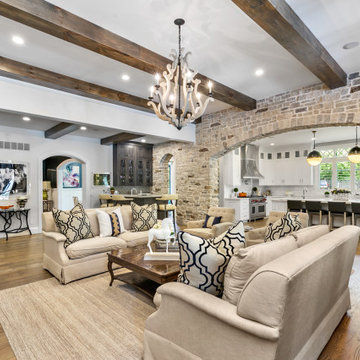
 Srote & Co Architects | Planners | Interiors
Interior design by others
Our architecture team was proud to design this traditional, cottage inspired home that is tucked within a developed residential location in St. Louis County. The main levels account for 6097 Sq Ft and an additional 1300 Sq Ft was reserved for the lower level. The homeowner requested a unique design that would provide backyard privacy from the street and an open floor plan in public spaces, but privacy in the master suite.
Challenges of this home design included a narrow corner lot build site, building height restrictions and corner lot setback restrictions. The floorplan design was tailored to this corner lot and oriented to take full advantage of southern sun in the rear courtyard and pool terrace area.
There are many notable spaces and visual design elements of this custom 5 bedroom, 5 bathroom brick cottage home. A mostly brick exterior with cut stone entry surround and entry terrace gardens helps create a cozy feel even before entering the home. Special spaces like a covered outdoor lanai, private southern terrace and second floor study nook create a pleasurable every-day living environment. For indoor entertainment, a lower level rec room, gallery, bar, lounge, and media room were also planned.
Find the right local pro for your project
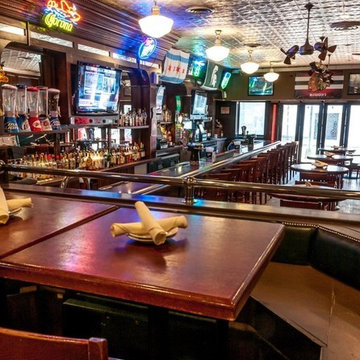
 Mcfaddens Chicago
No matter what your perception of Chicago is, no one can deny that the most renowned adjective for it is Chicago is the city that never sleeps. Almost literally, just when firms and offices start closing at twilight, so does the nightlife starts stirring. After a long day's work in the busiest industrial civilization, everyone yearns for a well earned the night of unwinding and fun.
These havens of fun and excitement have contributed to Chicago's reputation as a nocturnal city. Because the people here work hard doesn't mean they don't know how to play hard.
While the jobs in this fabulous city are amazing and relatively high-paying the stress that comes with it is no joke either. You have to work hard to earn it. That's why bar hopping and clubbing is not unusual for people in Chicago. But then again, seeing the same old places, hearing the same old music and experiencing the same old experience will eventually result to boredom.
If the boredom continues, nightlife wouldn't be so fun anymore. It is going to defeat the purpose of relaxation and fun. The party people are going to suffocate. Fortunately, there is now a new style of clubbing that will definitely account for the best bar experience in Chicago. It is the private party rooms in Chicago, it is world's number one with a fully enclosed penthouse lounge, Irish bar and Sports Bar in Chicago. The private party rooms Chicago guarantees to give you one of the best restaurants Chicago experience.
Not only that but the partially heated Chicago Irish bar is spacious enough to accommodate more than 1,000 guests without actually sacrificing comfort. It is indeed the ideal place for meeting people or even just for simple night scenic viewing among the best Bar Chicago.
To top it off, the restaurants with private party rooms in Chicago is a venue flexible enough to suit any gathering you might want to hold. From cocktails that entail hors d'oeuvres, to sumptuous buffet luncheons for business meetings to the more formal and intimate dinners, among many best bars Chicago. Private party rooms in Chicago are the best you could offer either to family, friend or special someone. There is indeed nothing you can't do in Chicago and the best place to start the thrill would be at private party rooms in Chicago.
Are you heading to Chicago on business or for pleasure? If so, you need to check out one of the best bars Chicago has to offer. Chicago is great during the day, there is tons of shopping and sightseeing, but when the sun goes down, the nightlife comes alive and must be checked out by all. Locating the hottest private party rooms in Chicago has to offer is as easy as visiting our website.
Original Source : https://mcfaddenschicago.wordpress.com/
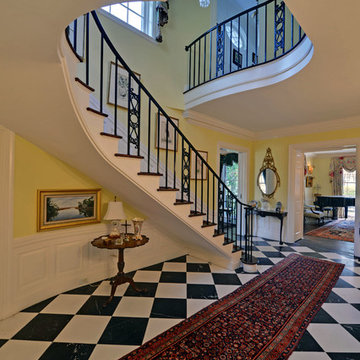 Envision Web
Stuart Wade, Envision Virtual Tours
The second-largest and most developed of Georgia's barrier islands, St. Simons is approximately twelve miles long and nearly three miles wide at its widest stretch (roughly the size of Manhattan Island in New York). The island is located in Glynn County on Georgia's coast and lies east of Brunswick (the seat of Glynn County), south of Little St. Simons Island and the Hampton River, and north of Jekyll Island. The resort community of Sea Island is separated from St. Simons on the east by the Black Banks River. Known for its oak tree canopies and historic landmarks, St. Simons is both a tourist destination and, according to the 2010 U.S. census, home to 12,743 residents.
Early History
The earliest
St. Simons Island Village
record of human habitation on the island dates to the Late Archaic Period, about 5,000 to 3,000 years ago. Remnants of shell rings left behind by Native Americans from this era survive on many of the barrier islands, including St. Simons. Centuries later, during the period known by historians as the chiefdom era, the Guale Indians established a chiefdom centered on St. Catherines Island and used St. Simons as their hunting and fishing grounds. By 1500 the Guale had established a permanent village of about 200 people on St. Simons, which they called Guadalquini.
Beginning in 1568, the Spanish attempted to create missions along the Georgia coast. Catholic missions were the primary means by which Georgia's indigenous Native American chiefdoms were assimilated into the Spanish colonial system along the northern frontier of greater Spanish Florida. In the 1600s St. Simons became home to two Spanish missions: San Buenaventura de Guadalquini, on the southern tip of the island, and Santo Domingo de Asao (or Asajo), on the northern tip. Located on the inland side of the island were the pagan refugee villages of San Simón, the island's namesake, and Ocotonico. In 1684 pirate raids left the missions and villages largely abandoned.
Colonial History
As
Fort Frederica
early as 1670, with Great Britain's establishment of the colony of Carolina and its expansion into Georgia territory, Spanish rule was threatened by the English. The Georgia coast was considered "debatable land" by England and Spain, even though Spain had fully retreated from St. Simons by 1702. Thirty-one years later General James Edward Oglethorpe founded the English settlement of Savannah. In 1736 he established Fort Frederica, named after the heir to the British throne, Frederick Louis, prince of Wales, on the west side of St. Simons Island to protect Savannah and the Carolinas from the Spanish threat.
Between 1736 and 1749 Fort Frederica was the hub of British military operations along the Georgia frontier. A town of the same name grew up around the fort and was of great importance to the new colony. By 1740 Frederica's population was 1,000. In 1736 the congregation of what would become Christ Church was organized within Fort Frederica as a mission of the Church of England. Charles Wesley led the first services. In 1742 Britain's decisive victory over Spain in the Battle of Bloody Marsh, during the War of Jenkins' Ear, ended the Spanish threat to the Georgia coast. When the British regimen disbanded in 1749, most of the townspeople relocated to the mainland. Fort Frederica went into decline and, except for a short time of prosperity during the 1760s and 1770s under the leadership of merchant James Spalding, never fully recovered. Today the historic citadel's tabby ruins are maintained by the National Park Service.
Plantation Era
By the start of the American Revolution (1775-83), Fort Frederica was obsolete, and St. Simons was left largely uninhabited as most of its residents joined the patriot army. Besides hosting a small Georgia naval victory on the Fort Frederica River, providing guns from its famous fort for use at Fort Morris in Sunbury, and serving as an arena for pillaging by privateers and British soldiers, the island played almost no role in the war.
Following the war, many of the townspeople, their businesses destroyed, turned to agriculture. The island was transformed into fourteen cotton plantations after acres of live oak trees were cleared for farm land and used for building American warships, including the famous USS Constitution, or "Old Ironsides." Although rice was the predominant crop along the neighboring Altamaha River, St. Simons was known for its production of long-staple cotton, which soon came to be known as Sea Island cotton.
Between
Ebos Landing
the 1780s and the outbreak of the Civil War (1861-65), St. Simons's plantation culture flourished. The saline atmosphere and the availability of cheap slave labor proved an ideal combination for the cultivation of Sea Island cotton. In 1803 a group of Ebo slaves who survived the Middle Passage and arrived on the west side of St. Simons staged a rebellion and drowned themselves. The sacred site is known today as Ebos Landing.
One of the largest owners of land and slaves on St. Simons was Pierce Butler, master of Hampton Point Plantation, located on the northern end of the island. By 1793 Butler owned more than 500 slaves, who cultivated 800 acres of cotton on St. Simons and 300 acres of rice on Butler's Island in the Altamaha River delta. Butler's grandson, Pierce Mease Butler, who at the age of sixteen inherited a share of his grandfather's estate in 1826, was responsible for the largest sale of human beings in the history of the United States: in 1859, to restore his squandered fortune, he sold 429 slaves in Savannah for more than $300,000. The British actress and writer Fanny Kemble, whose tumultuous marriage to Pierce ended in divorce in 1849, published an eyewitness account of the evils of slavery on St. Simons in her book Journal of a Residence on a Georgian Plantation in 1838-1839 (1863).
Another
Retreat Plantation
large owner of land and slaves on St. Simons was Major William Page, a friend and employee of Pierce Butler Sr. Before purchasing Retreat Plantation on the southwestern tip of the island in 1804, Page managed the Hampton plantation and Butler's Island. Upon Page's death in 1827, Thomas Butler King inherited the land together with his wife, Page's daughter, Anna Matilda Page King. King expanded his father-in-law's planting empire on St. Simons as well as on the mainland, and by 1835 Retreat Plantation alone was home to as many as 355 slaves.
The center of life during the island's plantation era was Christ Church, Frederica. Organized in 1807 by a group of island planters, the Episcopal church is the second oldest in the Diocese of Georgia. Embargoes imposed by the War of 1812 (1812-15) prevented the parishioners from building a church structure, so they worshiped in the home of John Beck, which stood on the site of Oglethorpe's only St. Simons residence, Orange Hall.
The first Christ Church building, finished on the present site in 1820, was ruined by occupying Union troops during the Civil War. In 1884 the Reverend Anson Dodge Jr. rebuilt the church as a memorial to his first wife, Ellen. The cruciform building with a trussed gothic roof and stained-glass windows remains active today as Christ Church.
Civil War and Beyond
The
St. Simons Island Lighthouse
outbreak of the Civil War in 1861 put a sudden end to St. Simons's lucrative plantation era. In January of that year, Confederate troops were stationed at the south end of the island to guard the entrance to Brunswick Harbor. Slaves from Retreat Plantation, owned by Thomas Butler King, built earthworks and batteries. Plantation residents were scattered—the men joined the Confederate army and their families moved to the mainland. Cannon fire was heard on the island in December 1861, and Confederate troops retreated in February 1862, after dynamiting the lighthouse to keep its beacon from aiding Union troops. Soon thereafter, Union troops occupied the island, which was used as a camp for freed slaves. By August 1862 more than 500 former slaves lived on St. Simons, including Susie King Taylor, who organized a school for freed slave children. But in November the ex-slaves were taken to Hilton Head, South Carolina, and Fernandina, Florida, leaving the island abandoned.
After the Civil War the island never returned to its status as an agricultural community. The plantations lay dormant because there were no slaves to work the fields. After Union general William T. Sherman's January 1865 Special Field Order No. 15 —a demand that former plantations be divided and distributed to former slaves—was overturned by U.S. president Andrew Johnson less than a year later, freedmen and women were forced to work as sharecroppers on the small farms that dotted the land previously occupied by the sprawling plantations.
By
St. Simons Lumber Mills
1870 real economic recovery began with the reestablishment of the timber industry. Norman Dodge and Titus G. Meigs of New York set up lumber mill operations at Gascoigne Bluff, formerly Hamilton Plantation. The lumber mills provided welcome employment for both blacks and whites and also provided mail and passenger boats to the mainland. Such water traffic, together with the construction of a new lighthouse in 1872, designed by architect Charles B. Cluskey, marked the beginning of St. Simons's tourism industry. The keeper of the lighthouse created a small amusement park, which drew many visitors, as did the seemingly miraculous light that traveled from the top of the lighthouse tower to the bottom. The island became a summer retreat for families from the mainland, particularly from Baxley, Brunswick, and Waycross.
The island's resort industry was thriving by the 1880s. Beachfront structures, such as a new pier and grand hotel, were built on the southeastern end of the island and could be accessed by ferry. Around this time wealthy northerners began vacationing on the island.
Twentieth Century
The
St. Simons Island Pier and Village
opening in 1924 of the Brunswick–St. Simons Highway, today known as the Torras Causeway, was a milestone in the development of resorts in the area. St. Simons's beaches were now easily accessible to locals and tourists alike. More than 5,000 automobiles took the short drive from Brunswick to St. Simons via the causeway on its opening day, paving the way for convenient residential and resort development.
In 1926 automotive pioneer Howard Coffin of Detroit, Michigan, bought large tracts of land on St. Simons, including the former Retreat Plantation, and constructed a golf course, yacht club, paved roads, and a residential subdivision. Although the causeway had brought large numbers of summer people to the island, St. Simons remained a small community with only a few hundred permanent residents until the 1940s.
The
St. Simons Island
outbreak of World War II (1941-45) brought more visitors and residents to St. Simons. Troops stationed at Jacksonville, Florida; Savannah; and nearby Camp Stewart took weekend vacations on the island, and a new naval air base and radar school became home to even more officers and soldiers. The increased wartime population brought the island its first public school. With a major shipyard for the production of Liberty ships in nearby Brunswick, the waters of St. Simons became active with German U-boats. In April 1942, just off the coast, the Texas Company oil tanker S. S. Oklahoma and the S. S. Esso Baton Rouge were torpedoed by the Germans, bringing the war very close to home for island residents.
Due in large part to the military's improvement of the island's infrastructure during the war, development on the island boomed in the 1950s and 1960s. More permanent homes and subdivisions were built, and the island was no longer just a summer resort but also a thriving community. In 1950 the Methodist conference and retreat center Epworth by the Sea opened on Gascoigne Bluff. In 1961 novelist Eugenia Price visited St. Simons and began work on her first works of fiction, known as the St. Simons Trilogy. Inspired by real events on the island, Price's trilogy renewed interest in the history of Georgia's coast, and the novelist herself relocated to the island in 1965 and lived there for thirty-one years. St. Simons is also home to contemporary Georgia writer Tina McElroy Ansa.
Since
Epworth by the Sea
1980 St. Simons's population has doubled. The island's continued status as a vacation destination and its ongoing development boom have put historic landmarks and natural areas at risk. While such landmarks as the Fort Frederica ruins and the Battle of Bloody Marsh site are preserved and maintained by the National Park Service, and while the historic lighthouse is maintained by the Coastal Georgia Historical Society, historic Ebos Landing has been taken over by a sewage treatment plant.
Several coastal organizations have formed in recent years to save natural areas on the island. The St. Simons Land Trust, for example, has received donations of large tracts of land and plans to protect property in the island's three traditional African American neighborhoods. Despite its rapid growth and development, St. Simons remains one of the most beautiful and important islands on the Georgia coast.
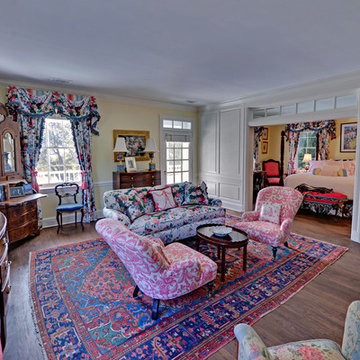 Envision Web
Stuart Wade, Envision Virtual Tours
The second-largest and most developed of Georgia's barrier islands, St. Simons is approximately twelve miles long and nearly three miles wide at its widest stretch (roughly the size of Manhattan Island in New York). The island is located in Glynn County on Georgia's coast and lies east of Brunswick (the seat of Glynn County), south of Little St. Simons Island and the Hampton River, and north of Jekyll Island. The resort community of Sea Island is separated from St. Simons on the east by the Black Banks River. Known for its oak tree canopies and historic landmarks, St. Simons is both a tourist destination and, according to the 2010 U.S. census, home to 12,743 residents.
Early History
The earliest
St. Simons Island Village
record of human habitation on the island dates to the Late Archaic Period, about 5,000 to 3,000 years ago. Remnants of shell rings left behind by Native Americans from this era survive on many of the barrier islands, including St. Simons. Centuries later, during the period known by historians as the chiefdom era, the Guale Indians established a chiefdom centered on St. Catherines Island and used St. Simons as their hunting and fishing grounds. By 1500 the Guale had established a permanent village of about 200 people on St. Simons, which they called Guadalquini.
Beginning in 1568, the Spanish attempted to create missions along the Georgia coast. Catholic missions were the primary means by which Georgia's indigenous Native American chiefdoms were assimilated into the Spanish colonial system along the northern frontier of greater Spanish Florida. In the 1600s St. Simons became home to two Spanish missions: San Buenaventura de Guadalquini, on the southern tip of the island, and Santo Domingo de Asao (or Asajo), on the northern tip. Located on the inland side of the island were the pagan refugee villages of San Simón, the island's namesake, and Ocotonico. In 1684 pirate raids left the missions and villages largely abandoned.
Colonial History
As
Fort Frederica
early as 1670, with Great Britain's establishment of the colony of Carolina and its expansion into Georgia territory, Spanish rule was threatened by the English. The Georgia coast was considered "debatable land" by England and Spain, even though Spain had fully retreated from St. Simons by 1702. Thirty-one years later General James Edward Oglethorpe founded the English settlement of Savannah. In 1736 he established Fort Frederica, named after the heir to the British throne, Frederick Louis, prince of Wales, on the west side of St. Simons Island to protect Savannah and the Carolinas from the Spanish threat.
Between 1736 and 1749 Fort Frederica was the hub of British military operations along the Georgia frontier. A town of the same name grew up around the fort and was of great importance to the new colony. By 1740 Frederica's population was 1,000. In 1736 the congregation of what would become Christ Church was organized within Fort Frederica as a mission of the Church of England. Charles Wesley led the first services. In 1742 Britain's decisive victory over Spain in the Battle of Bloody Marsh, during the War of Jenkins' Ear, ended the Spanish threat to the Georgia coast. When the British regimen disbanded in 1749, most of the townspeople relocated to the mainland. Fort Frederica went into decline and, except for a short time of prosperity during the 1760s and 1770s under the leadership of merchant James Spalding, never fully recovered. Today the historic citadel's tabby ruins are maintained by the National Park Service.
Plantation Era
By the start of the American Revolution (1775-83), Fort Frederica was obsolete, and St. Simons was left largely uninhabited as most of its residents joined the patriot army. Besides hosting a small Georgia naval victory on the Fort Frederica River, providing guns from its famous fort for use at Fort Morris in Sunbury, and serving as an arena for pillaging by privateers and British soldiers, the island played almost no role in the war.
Following the war, many of the townspeople, their businesses destroyed, turned to agriculture. The island was transformed into fourteen cotton plantations after acres of live oak trees were cleared for farm land and used for building American warships, including the famous USS Constitution, or "Old Ironsides." Although rice was the predominant crop along the neighboring Altamaha River, St. Simons was known for its production of long-staple cotton, which soon came to be known as Sea Island cotton.
Between
Ebos Landing
the 1780s and the outbreak of the Civil War (1861-65), St. Simons's plantation culture flourished. The saline atmosphere and the availability of cheap slave labor proved an ideal combination for the cultivation of Sea Island cotton. In 1803 a group of Ebo slaves who survived the Middle Passage and arrived on the west side of St. Simons staged a rebellion and drowned themselves. The sacred site is known today as Ebos Landing.
One of the largest owners of land and slaves on St. Simons was Pierce Butler, master of Hampton Point Plantation, located on the northern end of the island. By 1793 Butler owned more than 500 slaves, who cultivated 800 acres of cotton on St. Simons and 300 acres of rice on Butler's Island in the Altamaha River delta. Butler's grandson, Pierce Mease Butler, who at the age of sixteen inherited a share of his grandfather's estate in 1826, was responsible for the largest sale of human beings in the history of the United States: in 1859, to restore his squandered fortune, he sold 429 slaves in Savannah for more than $300,000. The British actress and writer Fanny Kemble, whose tumultuous marriage to Pierce ended in divorce in 1849, published an eyewitness account of the evils of slavery on St. Simons in her book Journal of a Residence on a Georgian Plantation in 1838-1839 (1863).
Another
Retreat Plantation
large owner of land and slaves on St. Simons was Major William Page, a friend and employee of Pierce Butler Sr. Before purchasing Retreat Plantation on the southwestern tip of the island in 1804, Page managed the Hampton plantation and Butler's Island. Upon Page's death in 1827, Thomas Butler King inherited the land together with his wife, Page's daughter, Anna Matilda Page King. King expanded his father-in-law's planting empire on St. Simons as well as on the mainland, and by 1835 Retreat Plantation alone was home to as many as 355 slaves.
The center of life during the island's plantation era was Christ Church, Frederica. Organized in 1807 by a group of island planters, the Episcopal church is the second oldest in the Diocese of Georgia. Embargoes imposed by the War of 1812 (1812-15) prevented the parishioners from building a church structure, so they worshiped in the home of John Beck, which stood on the site of Oglethorpe's only St. Simons residence, Orange Hall.
The first Christ Church building, finished on the present site in 1820, was ruined by occupying Union troops during the Civil War. In 1884 the Reverend Anson Dodge Jr. rebuilt the church as a memorial to his first wife, Ellen. The cruciform building with a trussed gothic roof and stained-glass windows remains active today as Christ Church.
Civil War and Beyond
The
St. Simons Island Lighthouse
outbreak of the Civil War in 1861 put a sudden end to St. Simons's lucrative plantation era. In January of that year, Confederate troops were stationed at the south end of the island to guard the entrance to Brunswick Harbor. Slaves from Retreat Plantation, owned by Thomas Butler King, built earthworks and batteries. Plantation residents were scattered—the men joined the Confederate army and their families moved to the mainland. Cannon fire was heard on the island in December 1861, and Confederate troops retreated in February 1862, after dynamiting the lighthouse to keep its beacon from aiding Union troops. Soon thereafter, Union troops occupied the island, which was used as a camp for freed slaves. By August 1862 more than 500 former slaves lived on St. Simons, including Susie King Taylor, who organized a school for freed slave children. But in November the ex-slaves were taken to Hilton Head, South Carolina, and Fernandina, Florida, leaving the island abandoned.
After the Civil War the island never returned to its status as an agricultural community. The plantations lay dormant because there were no slaves to work the fields. After Union general William T. Sherman's January 1865 Special Field Order No. 15 —a demand that former plantations be divided and distributed to former slaves—was overturned by U.S. president Andrew Johnson less than a year later, freedmen and women were forced to work as sharecroppers on the small farms that dotted the land previously occupied by the sprawling plantations.
By
St. Simons Lumber Mills
1870 real economic recovery began with the reestablishment of the timber industry. Norman Dodge and Titus G. Meigs of New York set up lumber mill operations at Gascoigne Bluff, formerly Hamilton Plantation. The lumber mills provided welcome employment for both blacks and whites and also provided mail and passenger boats to the mainland. Such water traffic, together with the construction of a new lighthouse in 1872, designed by architect Charles B. Cluskey, marked the beginning of St. Simons's tourism industry. The keeper of the lighthouse created a small amusement park, which drew many visitors, as did the seemingly miraculous light that traveled from the top of the lighthouse tower to the bottom. The island became a summer retreat for families from the mainland, particularly from Baxley, Brunswick, and Waycross.
The island's resort industry was thriving by the 1880s. Beachfront structures, such as a new pier and grand hotel, were built on the southeastern end of the island and could be accessed by ferry. Around this time wealthy northerners began vacationing on the island.
Twentieth Century
The
St. Simons Island Pier and Village
opening in 1924 of the Brunswick–St. Simons Highway, today known as the Torras Causeway, was a milestone in the development of resorts in the area. St. Simons's beaches were now easily accessible to locals and tourists alike. More than 5,000 automobiles took the short drive from Brunswick to St. Simons via the causeway on its opening day, paving the way for convenient residential and resort development.
In 1926 automotive pioneer Howard Coffin of Detroit, Michigan, bought large tracts of land on St. Simons, including the former Retreat Plantation, and constructed a golf course, yacht club, paved roads, and a residential subdivision. Although the causeway had brought large numbers of summer people to the island, St. Simons remained a small community with only a few hundred permanent residents until the 1940s.
The
St. Simons Island
outbreak of World War II (1941-45) brought more visitors and residents to St. Simons. Troops stationed at Jacksonville, Florida; Savannah; and nearby Camp Stewart took weekend vacations on the island, and a new naval air base and radar school became home to even more officers and soldiers. The increased wartime population brought the island its first public school. With a major shipyard for the production of Liberty ships in nearby Brunswick, the waters of St. Simons became active with German U-boats. In April 1942, just off the coast, the Texas Company oil tanker S. S. Oklahoma and the S. S. Esso Baton Rouge were torpedoed by the Germans, bringing the war very close to home for island residents.
Due in large part to the military's improvement of the island's infrastructure during the war, development on the island boomed in the 1950s and 1960s. More permanent homes and subdivisions were built, and the island was no longer just a summer resort but also a thriving community. In 1950 the Methodist conference and retreat center Epworth by the Sea opened on Gascoigne Bluff. In 1961 novelist Eugenia Price visited St. Simons and began work on her first works of fiction, known as the St. Simons Trilogy. Inspired by real events on the island, Price's trilogy renewed interest in the history of Georgia's coast, and the novelist herself relocated to the island in 1965 and lived there for thirty-one years. St. Simons is also home to contemporary Georgia writer Tina McElroy Ansa.
Since
Epworth by the Sea
1980 St. Simons's population has doubled. The island's continued status as a vacation destination and its ongoing development boom have put historic landmarks and natural areas at risk. While such landmarks as the Fort Frederica ruins and the Battle of Bloody Marsh site are preserved and maintained by the National Park Service, and while the historic lighthouse is maintained by the Coastal Georgia Historical Society, historic Ebos Landing has been taken over by a sewage treatment plant.
Several coastal organizations have formed in recent years to save natural areas on the island. The St. Simons Land Trust, for example, has received donations of large tracts of land and plans to protect property in the island's three traditional African American neighborhoods. Despite its rapid growth and development, St. Simons remains one of the most beautiful and important islands on the Georgia coast.





 Brody Johnson
Get Verified Binance Accounts for Secure Cryptocurrency
We offer completely secure and fully authenticated Buy Verified Binance Accounts at an affordable rate. If you want safe stable Buy Verified Binance Accounts you can place your order at usavccstore.com We are 100% trusted so you have no chance to lose your money.
Our service gives-
➤ Personal and Business Accounts
➤ 100% Phone Verified USA, UK and other Countries
➤ Real Gmail used USA, UK and other Countries
➤ 100% full Documents Verified
➤ SNN Code and Router Number
➤ Driving License (Front and back)
➤ Passport Number or Passport Card
➤ 100% Customer Satisfaction Guaranteed
➤ 100% Money Back Guarantee
➤ 30 Days Replacement
➤ Replacement Guaranteed within short time
➤ If you want to buy this product, you must Advance Payment.
We consistently offer top-quality services tailored to meet our customers’ needs. We guarantee quick delivery and full customer satisfaction. Feel free to place your order for the best service experience.
If You want to more information just contact now .24 Hours Reply/ Contact : –
Gmail : usavccstore@gmail.com
Telegram : usavccstore1
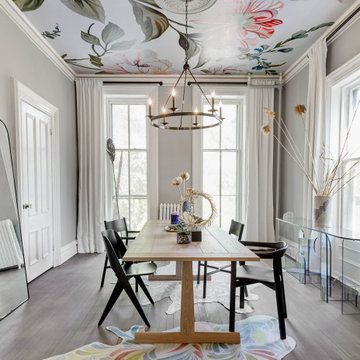
 Ana Claudia Design
Most design showhouses are properties for sale, and each designer creates a space for viewing. It’s a great way to market the property and the designer. However, the Kingston Design Showhouse in the Fall of 2019 was at Historic Wiltyck House in Kingston, New York, that's partially used as an Airbnb and home for the owners. The room I designed is the homeowner's private dining room; therefore, we took their taste and needs into account, especially on architectural decisions.
The overall style is a mixture of modern and traditional, feminine and masculine, and moody and bright, lots of depth but not overwhelming. The architecture serves as a canvas for the furniture showcased during the exhibit and then the homeowner's furniture that will occupy the space afterward. Small details such as replacing or refinishing the doorknobs, replacing the switches and outlets were not forgotten. Then more significant details such as the wallpapered ceiling, new ceiling medallion, and light fixture make a tremendous impact on the space. The wall paint is neutral enough but adds depth with its medium tone gray. Then we added a white border and mauve painted trim as an interpretation of the crown molding that's missing.
During the exhibit, we had local makers from the Hudson Valley well represented through furniture, accessories, art, and floral arrangements. All are makers that I love and want to share with you; without them, the room wouldn’t be as lovely as it is.

 Digital Marketing
We offer different types of ads accounts, including Personal, Business Manager, and Agency-level accounts, suitable for both beginners and professionals.
✅ WhatsApp: +1 (989) 513-2521 ✅ Telegram: @itzonesmm0
 Digital Marketing
Buy GitHub Accounts
✅✅✅✅✅✅✅✅✅✅✅✅✅
✅ 24 Hours Reply / Contact ✅ WhatsApp: +1 (989) 513-2521 ✅ Telegram: @itzonesmm0
✅✅✅✅✅✅✅✅✅✅✅✅✅✅✅✅✅
Are you looking to buy a Gmail account? You first go to the reputable online platform Itzonesmm.com. Itzonesmm.com provides 100% genuine and durable Gmail accounts at best rates.
 Digital Marketing
Buy Old GitHub Accounts
?☀️⭐??❤️?????❤️?☀️?⭐⭐?⭐
24 Hours Reply/Contact
✅ ➤ Telegram: @itzonesmm0
✅ ➤ WhatsApp: +1 (989) 513-2521
✅ ➤ https://itzonesmm.com/product/buy-github-accounts/
?☀️⭐??❤️?????❤️?☀️?⭐⭐?⭐
GitHub has become one of the world's leading platforms for software development, collaboration, and version control. Millions of developers, startups, businesses, and open-source contributors rely on GitHub to host repositories, manage projects, and collaborate on code. As the platform continues to grow, Old GitHub Accounts have become increasingly valuable for professionals seeking established accounts with a longer history.
Whether you're a software developer, development agency, DevOps engineer, or technology entrepreneur, an older GitHub account may provide advantages when building a professional presence, contributing to open-source communities, or managing development projects.
In this comprehensive guide from itzonesmm.com, we'll explain what Old GitHub Accounts are, their key features, benefits, common use cases, security considerations, and how to choose reliable accounts for legitimate purposes.
What Are Old GitHub Accounts?
Old GitHub Accounts are GitHub user accounts that were created months or years ago and have an established account age. Compared to newly registered accounts, older GitHub accounts have existed on the platform for a longer period and may include a history of activity, depending on how they have been used.
Many professionals appreciate aged accounts because they represent an established presence within the GitHub ecosystem.
While account age alone does not determine credibility or technical ability, many organizations and developers value accounts that have been maintained over time.
Why Are Old GitHub Accounts Popular?
The growing demand for Old GitHub Accounts is driven by the increasing importance of GitHub in software development and collaboration.
Older accounts are commonly sought after because they offer:
Established account history
Professional online identity
Long-term platform presence
Convenient project management
Faster onboarding for development workflows
Support for multiple business activities
For organizations managing several projects or teams, established GitHub accounts can help simplify account organization.
Key Features of Old GitHub Accounts
Established Account Age
The defining feature of Old GitHub Accounts is their creation date. These accounts have existed on GitHub for an extended period compared to newly created accounts.
Access to GitHub Features
Old GitHub accounts can access the same core GitHub features available to standard users, including:
Repository creation
Code hosting
Version control using Git
Pull requests
Issue tracking
Discussions
Wikis
GitHub Actions
GitHub Pages
These features make GitHub one of the most powerful collaboration platforms available today.
?☀️⭐??❤️?????❤️?☀️?⭐⭐?⭐
24 Hours Reply/Contact
✅ ➤ Telegram: @itzonesmm0
✅ ➤ WhatsApp: +1 (989) 513-2521
✅ ➤ https://itzonesmm.com/product/buy-github-accounts/
?☀️⭐??❤️?????❤️?☀️?⭐⭐?⭐
Developer Collaboration
GitHub enables seamless collaboration among development teams through:
Branch management
Code reviews
Merge requests
Team permissions
Project boards
Workflow automation
Older accounts fit naturally into collaborative development environments.
Secure Authentication
GitHub provides several security tools, including:
Two-factor authentication
SSH key authentication
Personal access tokens
Passkey support
Security alerts
Device management
Users should always enable available security features to protect their accounts.
Benefits of Old GitHub Accounts
Professional Online Presence
An established GitHub account can contribute to a more professional appearance when participating in software communities or collaborating on projects.
Better Project Organization
Many companies manage multiple repositories, clients, and products.
Using separate GitHub accounts can help organize:
Client repositories
Internal development
Testing projects
Research repositories
Open-source contributions
Time Savings
Creating and configuring new development accounts for every project takes time.
Older accounts may reduce setup effort by providing an already established GitHub profile.
Useful for Development Agencies
Software agencies often require multiple GitHub accounts for:
Team collaboration
Client management
Repository organization
Development workflows
Quality assurance
Old GitHub accounts can simplify account management across various projects.
Flexible for Different Industries
Professionals in many sectors benefit from GitHub, including:
Software development
Web development
Mobile app development
Artificial intelligence
Data science
Cybersecurity
DevOps
Cloud engineering
Common Uses of Old GitHub Accounts
Professionals use Old GitHub Accounts for many legitimate purposes, including:
Software Development
Developers manage source code, branches, and releases using GitHub.
Open-Source Contributions
GitHub remains the largest platform for contributing to open-source software projects.
Team Collaboration
Development teams collaborate efficiently through repositories, pull requests, and project boards.
Portfolio Building
Many developers use GitHub profiles to showcase coding projects and technical skills to employers or clients.
Documentation Management
GitHub supports documentation through Markdown files and project wikis, making it easy to maintain technical documentation.
Continuous Integration
GitHub Actions enables developers to automate testing, deployment, and other workflows directly from their repositories.
?☀️⭐??❤️?????❤️?☀️?⭐⭐?⭐
24 Hours Reply/Contact
✅ ➤ Telegram: @itzonesmm0
✅ ➤ WhatsApp: +1 (989) 513-2521
✅ ➤ https://itzonesmm.com/product/buy-github-accounts/
?☀️⭐??❤️?????❤️?☀️?⭐⭐?⭐
Why Businesses Choose Old GitHub Accounts
Modern software companies rely heavily on GitHub for daily operations.
Some reasons businesses choose established accounts include:
Organized repository management
Team collaboration
Professional project administration
Long-term development planning
Cloud-based code storage
Version tracking
Using well-managed GitHub accounts can improve workflow efficiency and project organization.
Best Practices for Using Old GitHub Accounts
To maximize security and maintain account integrity, follow these best practices:
Change the password immediately after obtaining access.
Enable two-factor authentication (2FA).
Update recovery information where appropriate.
Use SSH keys for secure authentication.
Review authorized applications regularly.
Avoid sharing credentials.
Maintain strong password hygiene.
Follow GitHub's Terms of Service and acceptable use policies.
Responsible account management is essential for protecting repositories and sensitive development work.
How to Choose Reliable Old GitHub Accounts
If you are considering acquiring Old GitHub Accounts, selecting a trustworthy provider is essential.
Look for:
Verified account information
Transparent service policies
Responsive customer support
Secure delivery methods
Positive customer feedback
Quality assurance
Clear account details
Working with reputable providers helps minimize risks and ensures a smoother experience.
Why Choose itzonesmm.com?
At itzonesmm.com, we understand the needs of developers, digital agencies, businesses, and technology professionals.
Customers choose itzonesmm.com because of:
Professional customer service
Reliable digital solutions
Competitive pricing
Fast delivery
Focus on quality
Customer satisfaction
Secure purchasing experience
Whether you're managing development teams, software projects, or technical operations, having dependable digital resources can help improve productivity.
SEO Benefits of Organized GitHub Management
Although GitHub itself is not an SEO tool, maintaining organized repositories and documentation can support broader digital strategies.
Benefits include:
Better project documentation
Easier collaboration
Faster development workflows
Improved portfolio presentation
Streamlined code management
Professional online visibility
Well-organized GitHub profiles also help demonstrate technical expertise to potential employers, partners, and clients.
Frequently Asked Questions (FAQs)
What are Old GitHub Accounts?
Old GitHub Accounts are GitHub profiles that were created in the past and have an established account age compared to newly registered accounts.
Why do developers use Old GitHub Accounts?
Developers may use older GitHub accounts to maintain a consistent professional presence, organize projects, collaborate with teams, and contribute to software development.
Are Old GitHub Accounts secure?
GitHub provides robust security features such as two-factor authentication, SSH keys, security alerts, and account monitoring. Users should enable these features and follow security best practices.
Can businesses use Old GitHub Accounts?
Yes. Businesses commonly use GitHub for version control, project management, software collaboration, documentation, and code hosting, provided they comply with GitHub's Terms of Service.
?☀️⭐??❤️?????❤️?☀️?⭐⭐?⭐
24 Hours Reply/Contact
✅ ➤ Telegram: @itzonesmm0
✅ ➤ WhatsApp: +1 (989) 513-2521
✅ ➤ https://itzonesmm.com/product/buy-github-accounts/
?☀️⭐??❤️?????❤️?☀️?⭐⭐?⭐
What should I consider before obtaining an Old GitHub Account?
Choose a reputable provider, verify account information, update security settings immediately, and ensure the account is used responsibly and in accordance with applicable platform policies.
Conclusion
Old GitHub Accounts can be valuable for developers, software agencies, startups, and businesses seeking an established presence on one of the world's leading development platforms. With access to powerful collaboration tools, version control capabilities, and GitHub's extensive ecosystem, older accounts can support professional workflows and efficient project management.
 Digital Marketing
Our Itzonesmm.com accounts will be the best for authentic and professional networking. So Buy Old Gmail Accounts in Itzonesmm.com.
✅ WhatsApp: +1 (989) 513-2521 ✅ Telegram: @itzonesmm0
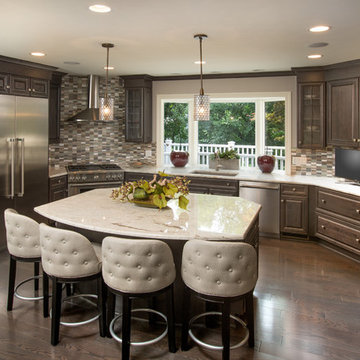
 Srote & Co Architects | Planners | Interiors
Interior design by others
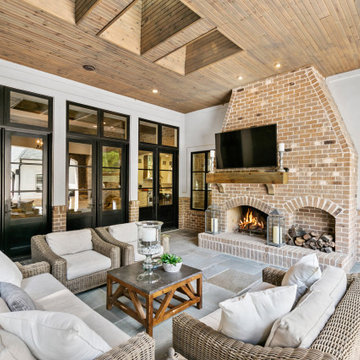
Our architecture team was proud to design this traditional, cottage inspired home that is tucked within a developed residential location in St. Louis County. The main levels account for 6097 Sq Ft and an additional 1300 Sq Ft was reserved for the lower level. The homeowner requested a unique design that would provide backyard privacy from the street and an open floor plan in public spaces, but privacy in the master suite.
Challenges of this home design included a narrow corner lot build site, building height restrictions and corner lot setback restrictions. The floorplan design was tailored to this corner lot and oriented to take full advantage of southern sun in the rear courtyard and pool terrace area.
There are many notable spaces and visual design elements of this custom 5 bedroom, 5 bathroom brick cottage home. A mostly brick exterior with cut stone entry surround and entry terrace gardens helps create a cozy feel even before entering the home. Special spaces like a covered outdoor lanai, private southern terrace and second floor study nook create a pleasurable every-day living environment. For indoor entertainment, a lower level rec room, gallery, bar, lounge, and media room were also planned.
 Digital Marketing
Our main goal is to fully satisfy all my customers.
✅ WhatsApp: +1 (989) 513-2521 ✅ Telegram: @itzonesmm0
Inspiration for an industrial home office remodel in Los Angeles
Inspiration for an industrial home office remodel in Los Angeles
 Brody Johnson
Buy Verified LinkedIn Account with Connections
We offer completely secure and fully authenticated Buy Verified LinkedIn Account at an affordable rate. If you want safe stable Buy Verified LinkedIn Accounts you can place your order at usavccstore.com We are 100% trusted so you have no chance to lose your money.
Our service gives-
➤ Active Verified LinkedIn Accounts
➤ 100% Non-Drop LinkedIn Accounts
➤ 100% Customer Satisfaction
➤ 100% Money Back Guarantee
➤ 30 Days Replacement Guarantee
➤ 24/7 Ready to Customer Live Support
➤ Replacement Guaranteed within short time
➤ If you want to buy this product, you must Advance Payment
We consistently offer top-quality services tailored to meet our customers’ needs. We guarantee quick delivery and full customer satisfaction. Feel free to place your order for the best service experience.
If You want to more information just contact now .24 Hours Reply/ Contact : –
Gmail : usavccstore@gmail.com
Telegram : @usavccstore1
 Digital Marketing
Older GitHub accounts
✅✅✅✅✅✅✅✅✅✅✅✅✅✅
24 Hours Reply/Contact
➤ Telegram: @itzonesmm0
➤ WhatsApp: +1 (989) 513-2521
➤ https://itzonesmm.com/product/buy-github-accounts/
✅✅✅✅✅✅✅✅✅✅✅✅
Older GitHub accounts work best in that case. That’s why Itzonesmm offers GitHub accounts, to save you time. You can confidently buy new and old GitHub accounts from us at very reasonable prices. We are always committed to your satisfaction. Buy GitHub Accounts
Sponsored
Sunbury, OH

J.Holderby - Renovations
Franklin County's Leading General Contractors - 2X Best of Houzz!

 Rachelle Design Studio
Designing a modern accounting firm requires a delicate balance between focused functionality, acoustic privacy, and a welcoming atmosphere for visiting clients. For this commercial project located in Coimbra, Portugal, Rachelle Design Lab implemented a "Warm Minimalism" concept to move away from the traditional, sterile office environment.
Key Features & Solutions:
Acoustic & Visual Comfort: Extensive use of vertical wood-slatted panels not only adds warmth and visual height to the space but also significantly improves the acoustic quality of the open-plan areas.
Smart Space Planning: Frameless glass partitions with frosted linear decals were strategically used to divide private meeting rooms and executive offices. This ensures acoustic privacy while allowing natural light to penetrate deep into the workspace.
Employee Well-being: A fully equipped, ergonomic kitchenette and dining area was designed using calming taupe tones and durable materials, providing a comfortable space for staff breaks.
Brand Integration: The color palette relies on calming neutrals (sand, light oak, grey) accented with deep burgundy tones that subtly echo the corporate identity of the company.
The result is a highly functional, ergonomic workspace that promotes productivity while reflecting the company's reliability and modern approach.
 Rachelle Design Studio
Designing a modern accounting firm requires a delicate balance between focused functionality, acoustic privacy, and a welcoming atmosphere for visiting clients. For this commercial project located in Coimbra, Portugal, Rachelle Design Lab implemented a "Warm Minimalism" concept to move away from the traditional, sterile office environment.
Key Features & Solutions:
Acoustic & Visual Comfort: Extensive use of vertical wood-slatted panels not only adds warmth and visual height to the space but also significantly improves the acoustic quality of the open-plan areas.
Smart Space Planning: Frameless glass partitions with frosted linear decals were strategically used to divide private meeting rooms and executive offices. This ensures acoustic privacy while allowing natural light to penetrate deep into the workspace.
Employee Well-being: A fully equipped, ergonomic kitchenette and dining area was designed using calming taupe tones and durable materials, providing a comfortable space for staff breaks.
Brand Integration: The color palette relies on calming neutrals (sand, light oak, grey) accented with deep burgundy tones that subtly echo the corporate identity of the company.
The result is a highly functional, ergonomic workspace that promotes productivity while reflecting the company's reliability and modern approach.
 Rachelle Design Studio
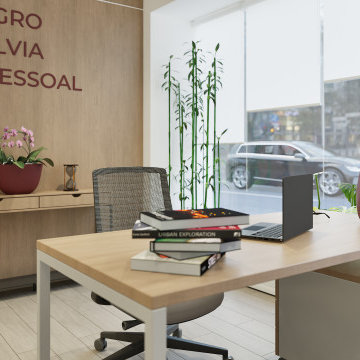
Designing a modern accounting firm requires a delicate balance between focused functionality, acoustic privacy, and a welcoming atmosphere for visiting clients. For this commercial project located in Coimbra, Portugal, Rachelle Design Lab implemented a "Warm Minimalism" concept to move away from the traditional, sterile office environment.
Key Features & Solutions:
Acoustic & Visual Comfort: Extensive use of vertical wood-slatted panels not only adds warmth and visual height to the space but also significantly improves the acoustic quality of the open-plan areas.
Smart Space Planning: Frameless glass partitions with frosted linear decals were strategically used to divide private meeting rooms and executive offices. This ensures acoustic privacy while allowing natural light to penetrate deep into the workspace.
Employee Well-being: A fully equipped, ergonomic kitchenette and dining area was designed using calming taupe tones and durable materials, providing a comfortable space for staff breaks.
Brand Integration: The color palette relies on calming neutrals (sand, light oak, grey) accented with deep burgundy tones that subtly echo the corporate identity of the company.
The result is a highly functional, ergonomic workspace that promotes productivity while reflecting the company's reliability and modern approach.
1